


Welcome to the World of Color Culture
Hello, and welcome to Color Heritage Letters.
I’m Kyoko Hidaka, a color researcher based in Tokyo. I am a professor at Joshibi University of Art and Design and a visiting researcher at the Art Research Center (ARC) at Ritsumeikan University. I studied at New York University in the United States and the Royal College of Art in the United Kingdom. My work explores the cross-cultural history of color and design. This year, I founded Color Heritage LLC to share knowledge of color culture through research and digital archiving.
I have been writing about color in Japanese for a professional newsletter, and now I’m excited to share these stories with a wider international audience.
Color is never just color. Red, for example, can symbolize danger in an airport, yet represent sacrifice in a cathedral. Through this publication, I hope to explore the many meanings of color, one story at a time.
Let me begin with a story from an airport.
“Passengers connecting to other flights, please follow the red signs.”
After hearing this announcement on my Emirates flight, I walked off the plane wondering what kind of signs were waiting for me.
Dubai International Airport (United Arab Emirates) is one of the world’s largest hub airports, and its signs for connecting and arriving passengers are color-coded: red for connections, blue for arrivals. Red is generally said to signal danger or caution, while blue suggests calm and reassurance.
The most important goal of an airport is to get passengers to their destinations correctly. Missing a connecting flight is something to avoid, so I suspect red is used to signal that urgency. Blue, on the other hand, probably gives arriving passengers a sense of reassurance.
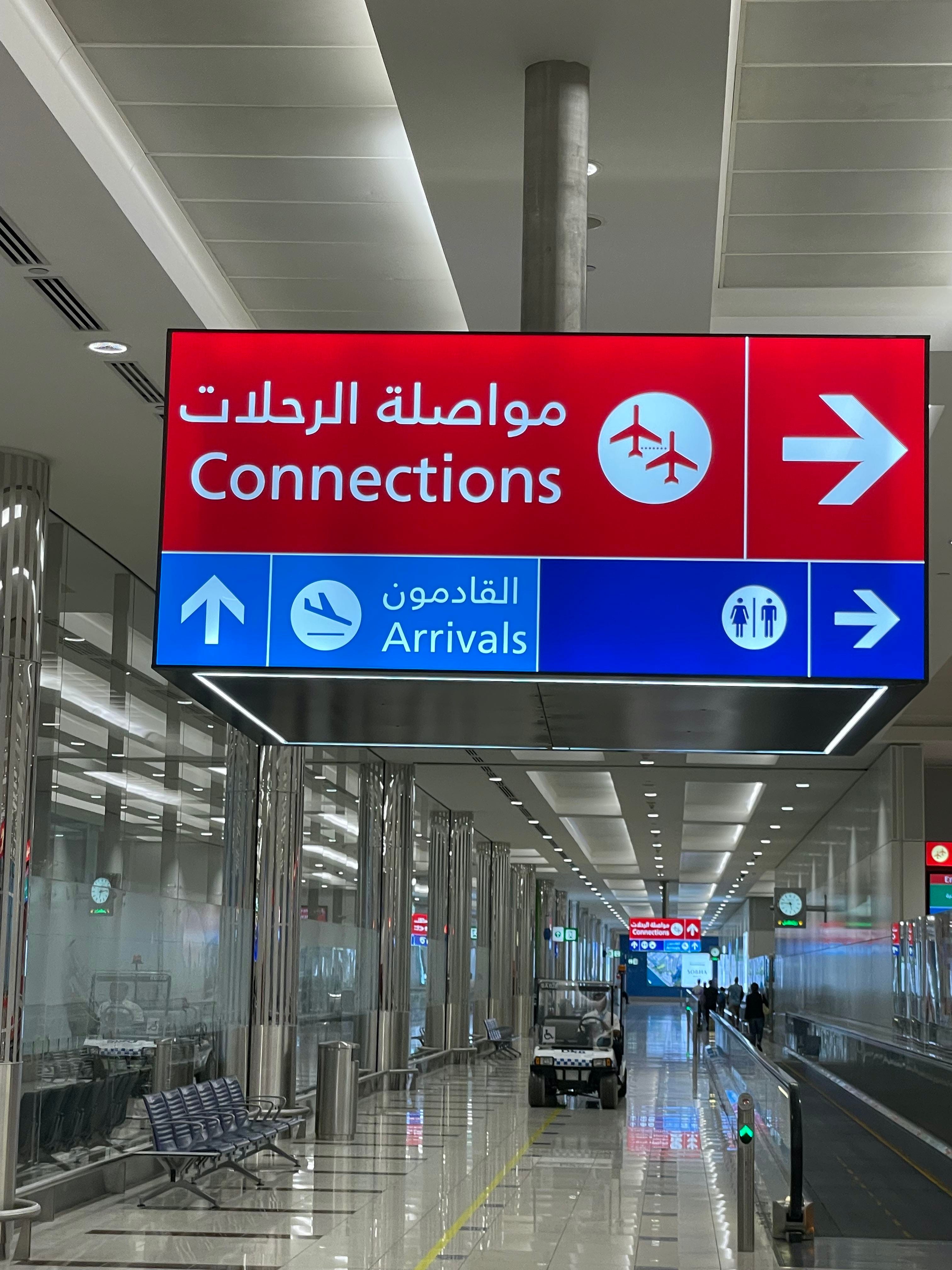
Photo: Dubai International Airport. Red for connections, blue for arrivals. The restroom signs are dark blue. (2023)
I also noticed that the restrooms at Dubai International did not use the red-and-blue gender coding familiar in Japan. Women’s and men’s restrooms were marked with white pictograms on a navy background.
At Haneda Airport in Japan, by contrast, connections and arrivals are shown in different colors: green for connections and yellow for arrivals. The restroom signs at Haneda follow the usual Japanese convention, with blue for men and red for women.
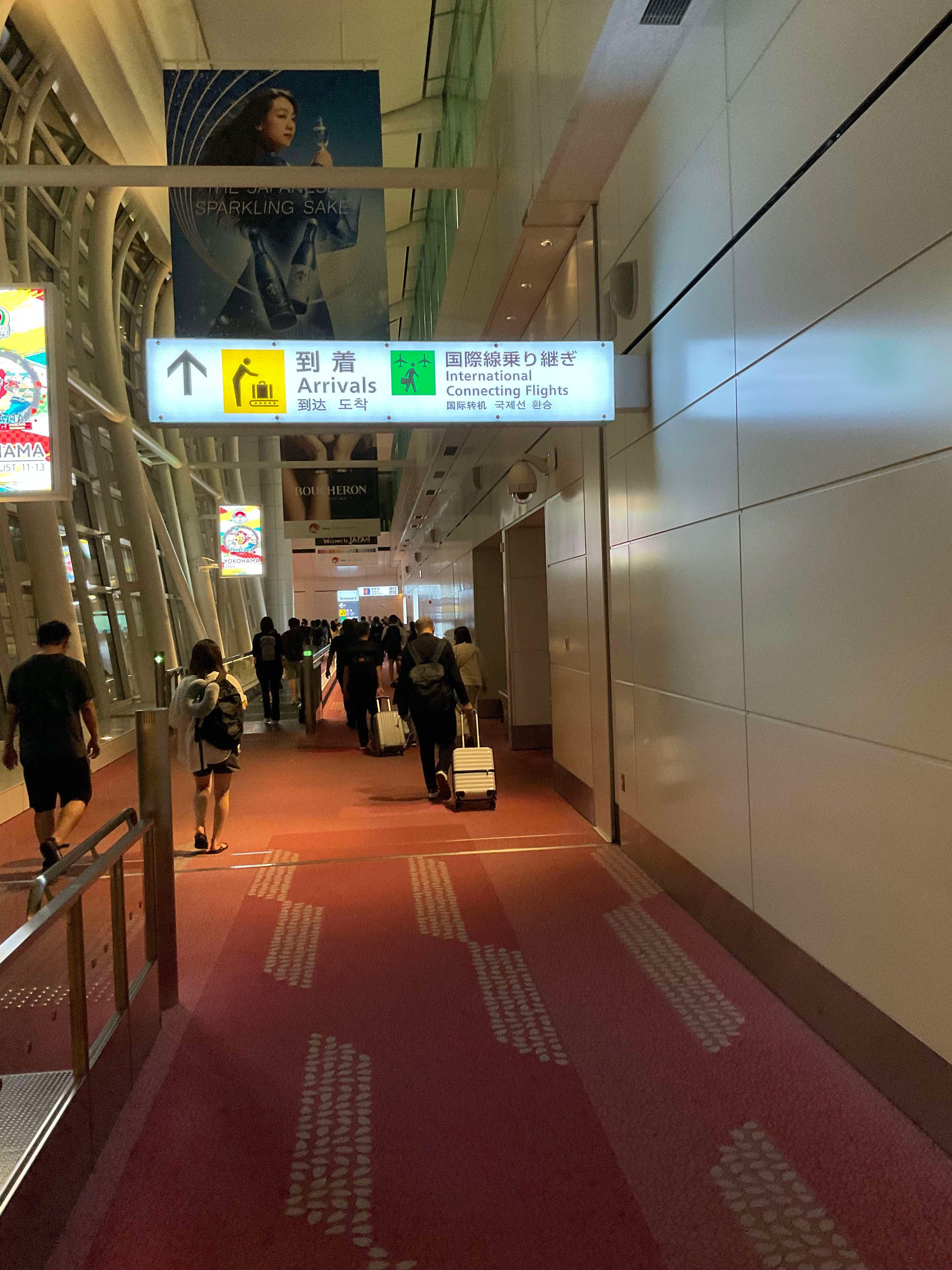
Photo: Haneda Airport. Green for connections, yellow for arrivals. (2023)
In early 2023, I supervised a survey asking people in 100 countries what they associated with the color red. The responses included blood, anger, passion, and danger. Notably, respondents in 92 of the 100 countries mentioned danger. People in 44 countries also associated red with women, while only a very small number associated it with men. In other words, “danger” far outweighs “woman” as a common association with red. And the stereotype of using color to distinguish men and women is gradually declining around the world.
It seems that the colors used to show connections and arrivals at airports are not standardized worldwide. For connections, Dubai uses red and Haneda uses green. For arrivals, Dubai uses blue and Haneda uses yellow.
In many countries, exit signs have been standardized in green. Yet for the same meaning, the signs at Dubai and Haneda use colors that sit opposite each other on the color wheel, which I found fascinating.
Have you noticed different colors on the signs at airports you’ve passed through? Tell me in the comments. I’d love to collect them.
Originally published in Japanese in the Color Science Association of Japan Kanto Branch Newsletter #92. Photos by the author, taken in 2023.
What to expect
Every Tuesday, I’ll send one short story about color: its history, its standards, its meanings, and how we keep it for the future. In the coming weeks, I’ll write about color culture, the difference between trend colors and standard colors, and whether a color can ever be archived.
If you’re curious about why colors look and mean what they do, and you enjoy stories that connect design, history, and everyday life, I’d be glad to have you here.
If you enjoyed this, please share it with a friend who loves color.